

Researching Gwen W. Shaw has been fascinating. Generally the well oiled algorithms behind genealogy sites purr into life and dump tons of mostly useful data in your lap as soon as you enter a name. With Gwen there was nothing. I began to think she was a spy with an assumed name, possibly the weaving was her cover story and all we would ever know would be a few sparse details in the guild archives. Then I realised that when she wrote her own name she always added a W. I tried the same and she slowly appeared.
Gwendoline Wood Kaye Burgess Shaw lead a well travelled and unconventional life. She was born in 1881 in Natal Colony, now part of South Africa. She was the eldest daughter of Henry Kaye Burgess, an Army Paymaster who moved around the world with his job and family. He died in France in 1890 when she was nine. The family had pensions from the Royal Chelsea Hospital and it's possible that they stayed in France until moving to London around 1911. Sometime between 1916 and 1920 Gwen was in Spain, (which was neutral in World War 1), where she married Percy L. Shaw. She wasn't married long, Percy died, but whether this was in the war or afterwards is another small mystery as the only possibly relevant death record I've found is the will of a Percy Shaw in Spain with a different wife.
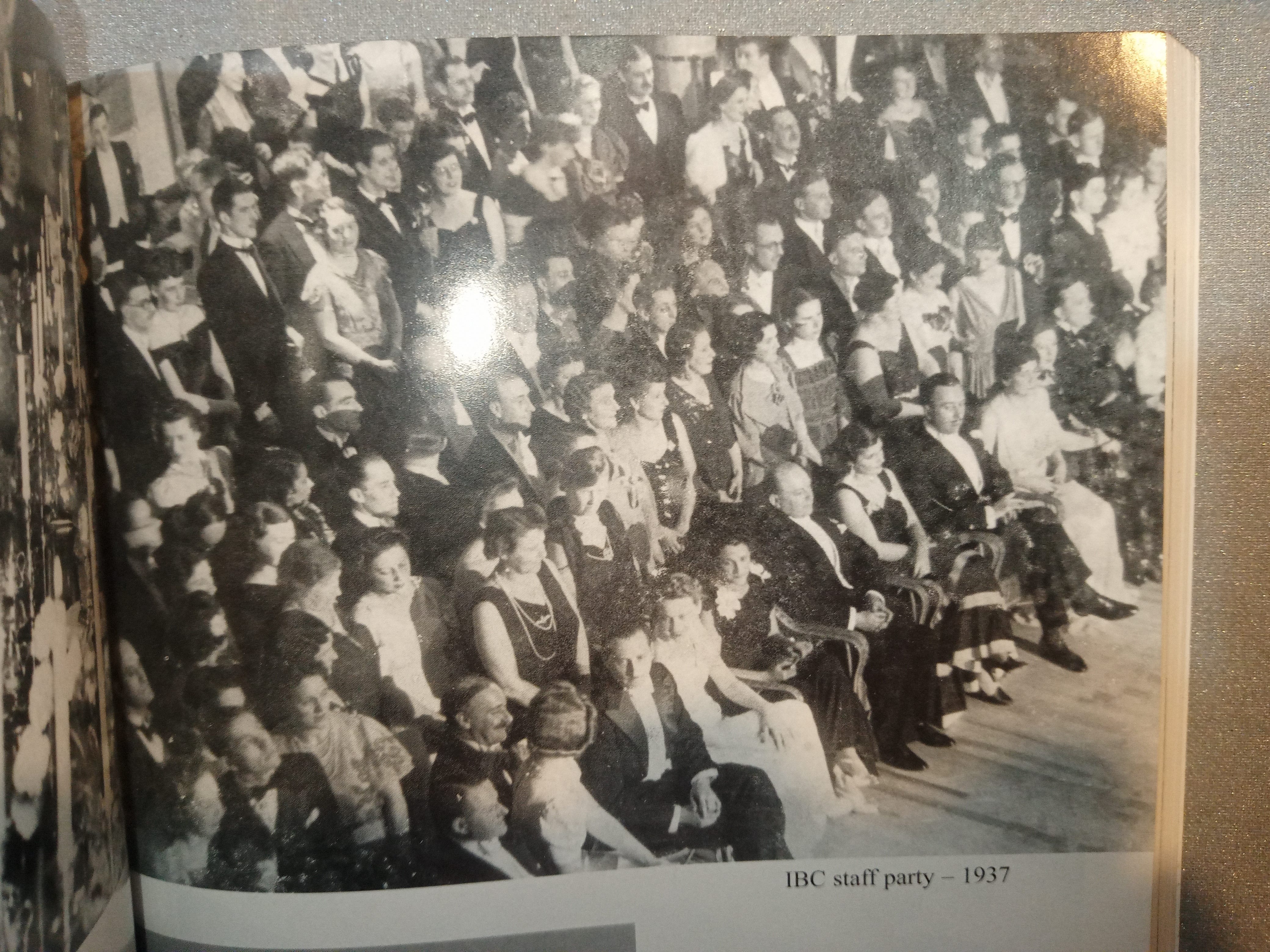
Gwen reappears in London in 1927, a widow, living with her mother Eliza. Around this time, by her own account, she became a director of the International Broadcasting Company, which ran the pirate radio station, Radio Normandy. She continued this role, apart from a break working as a postal censor during WW2 and ran IBC’s Facilities House where music and adverts were recorded until just before she died. After World War 2 she also lived at the studios, at 35 Portland Place where she had “a full size hand and foot loom” set in one of the windows. Despite clearly having a key role at the IBC she is scarcely mentioned in the biography of it's founder Leonard F. Plugge”1. The biography records some of his deeply unpleasant behaviour towards women; hopefully her absence from it means that their relationship was professional and he didn't treat her badly. IBC was sold two years after Gwen died, which perhaps indicates the depth of her involvement in the company.
According to Dorothy Wilkinson 2 "She became interested in becoming a weaver when staying near Canterbury" Around 1948 she went to London School for Weaving for a course with Dorothy "a friend introduced her to the firm of Douglas Andrew from which firm she bought a 42" loom. Then she came to Church St ( home of the London School of Weaving) daily for several weeks and received her instruction from us"
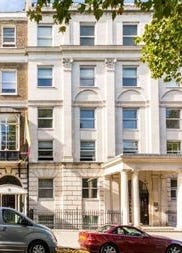
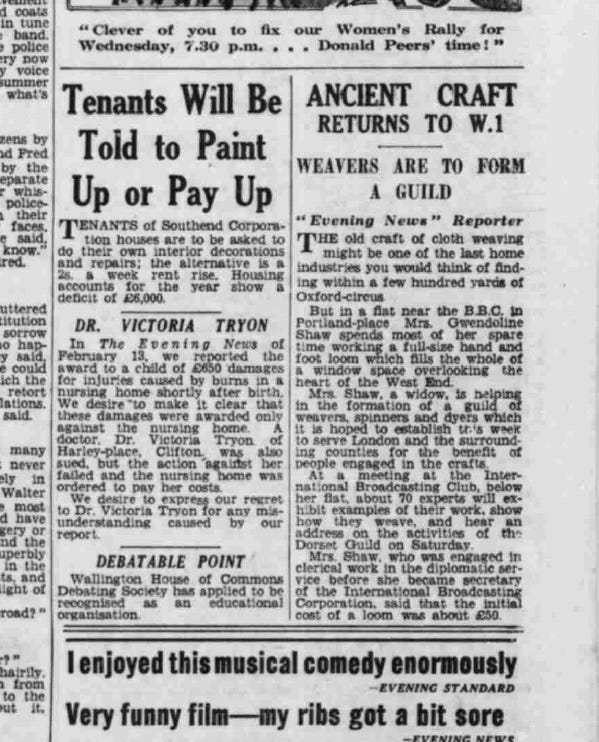
Dorothy explains that Gwen met a journalist from the London Evening News who wrote an article on her which included her wish for a guild of weavers in London. She also met Hester Viney from the Dorset Guild, as they went to the same club. This led to her hosting a meeting at IBC’s Portland Place studios, in 1950, to set up the London Guild. 130 people came, (one of the studios was orchestral in size). She was very good at leveraging connections, using her status as a Harrods shareholder to arrange our first exhibition there. She became Honorary Secretary, successfully running the 450 member Guild alongside her work until a year before her death in 1960.
Gwen died in Dorset at her brothers house, aged 79. The Guild named a Competition Cup in her memory, which weavers still compete for every year. IBC was sold two years after her death.
Like many other remarkable women she has disappeared from records (other than the Guild's) since her death. I am still looking for a photo of her and I still have no idea why her second name was Wood.